

National Museum of American History
Object Details
inventor : Bell, Alexander Graham
Description
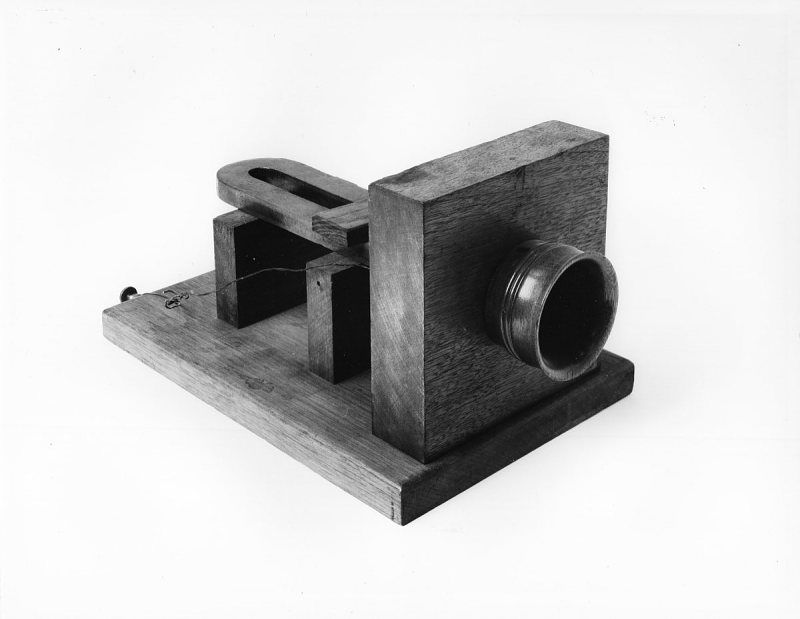
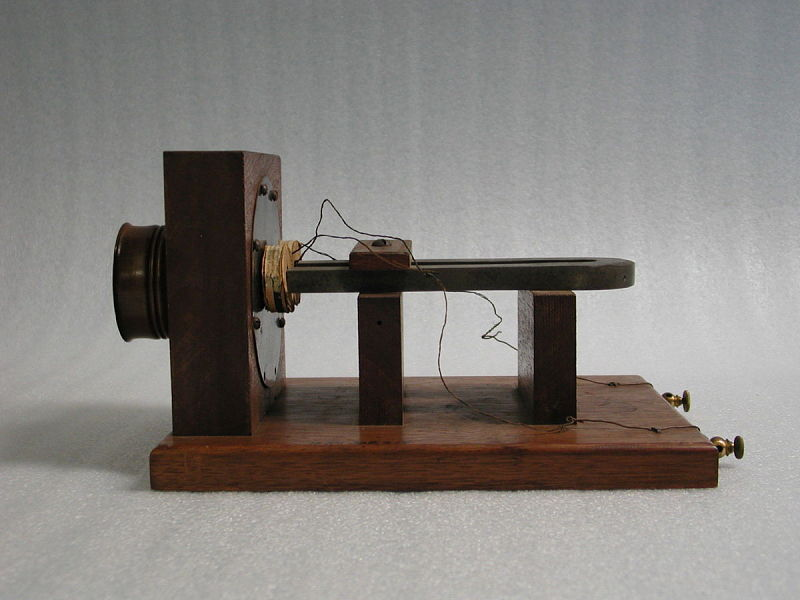
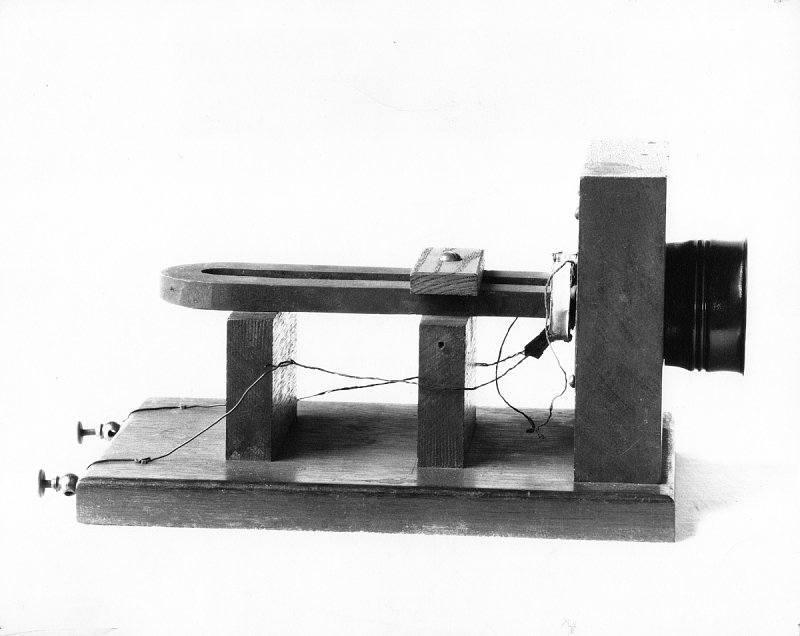
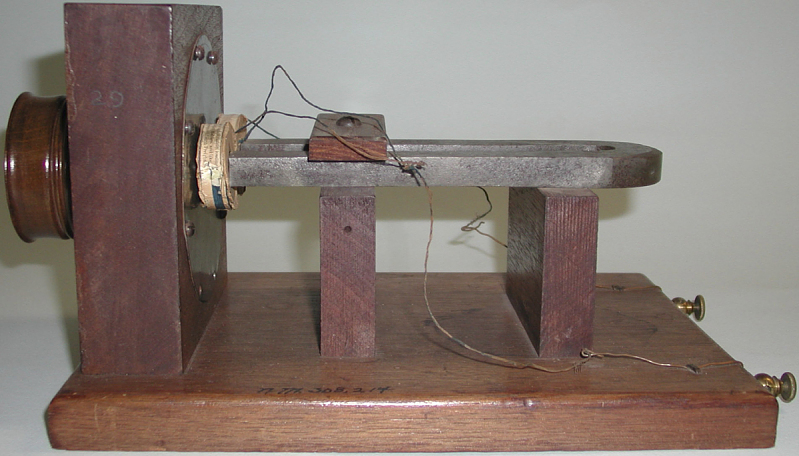
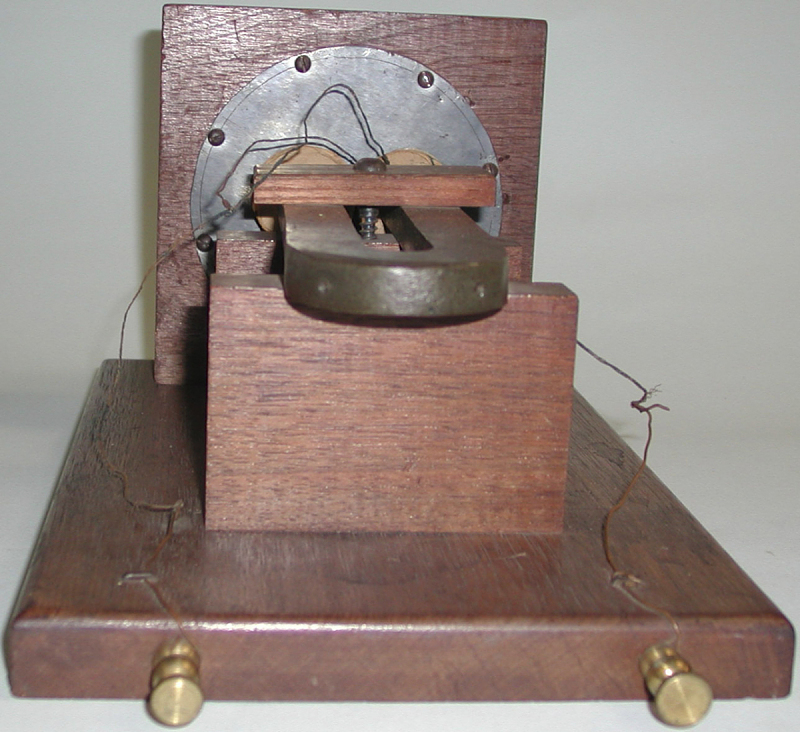
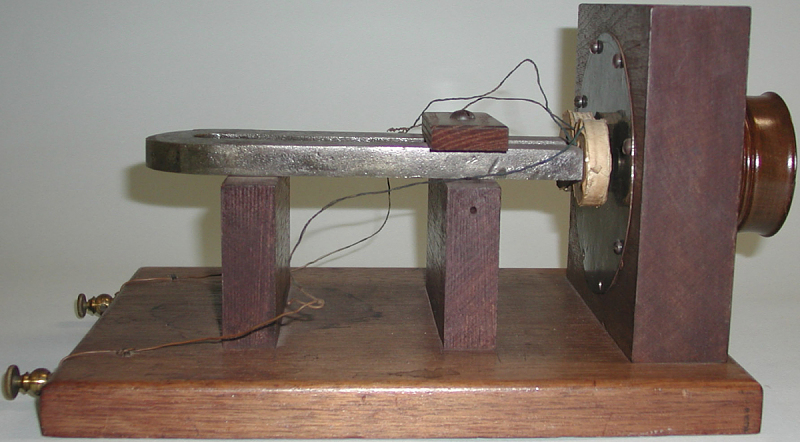
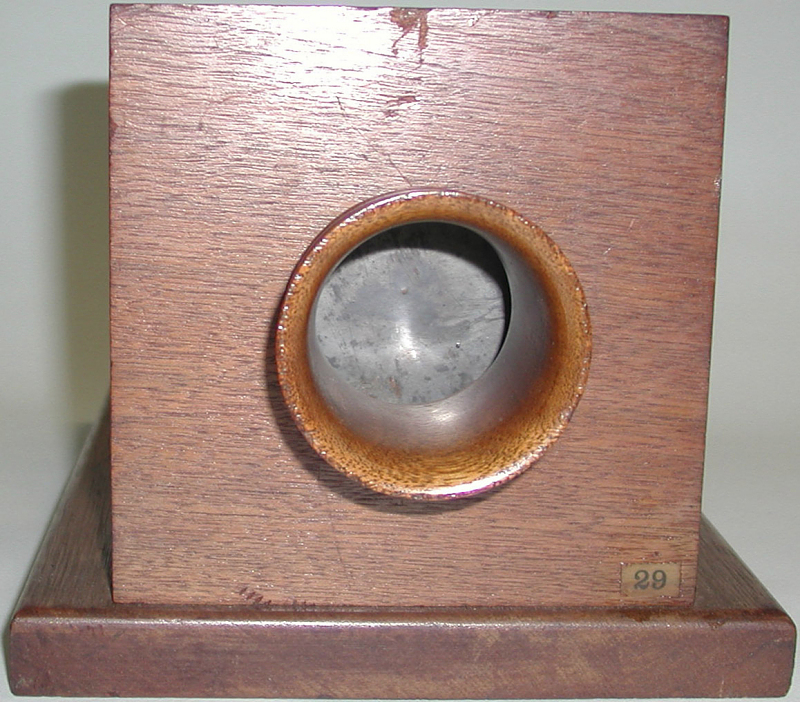
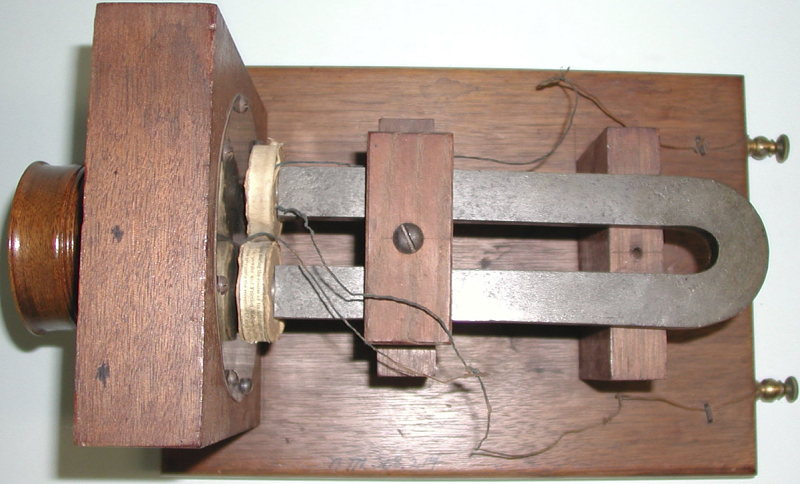
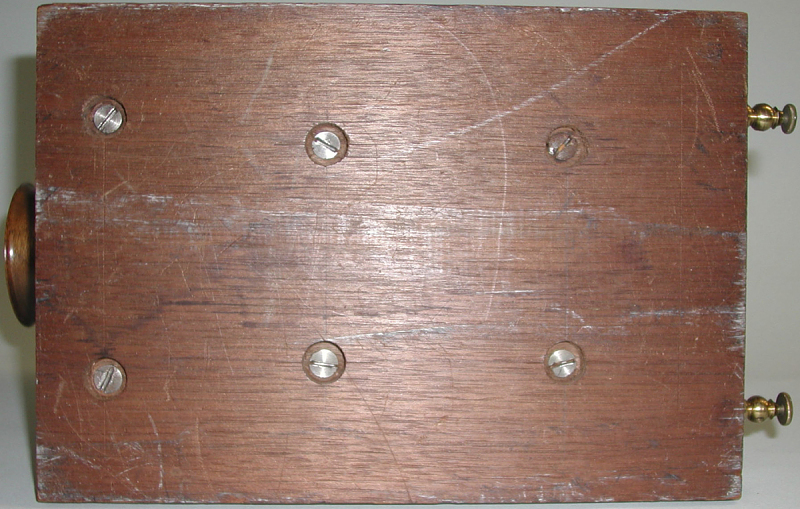
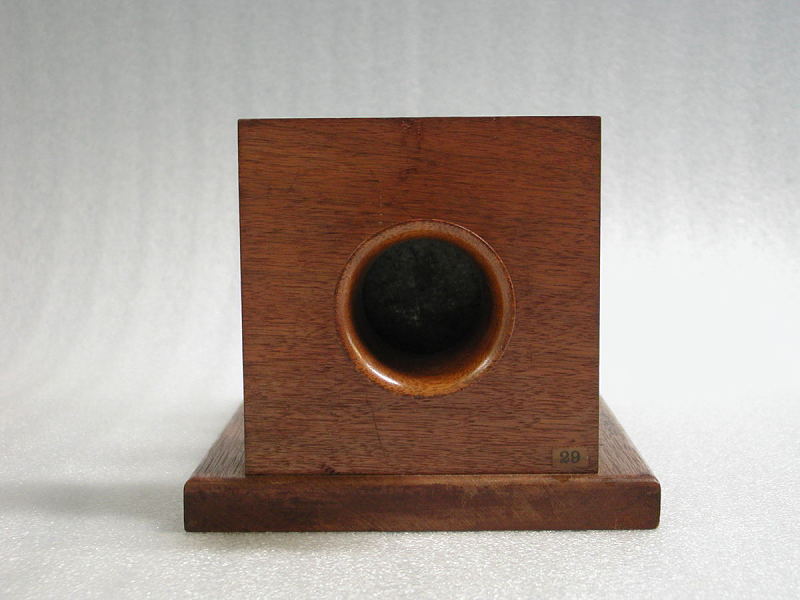
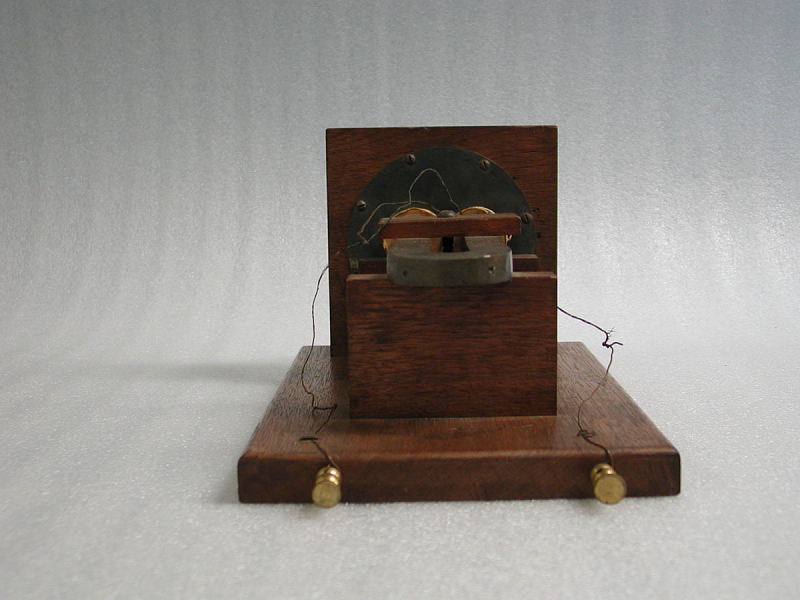
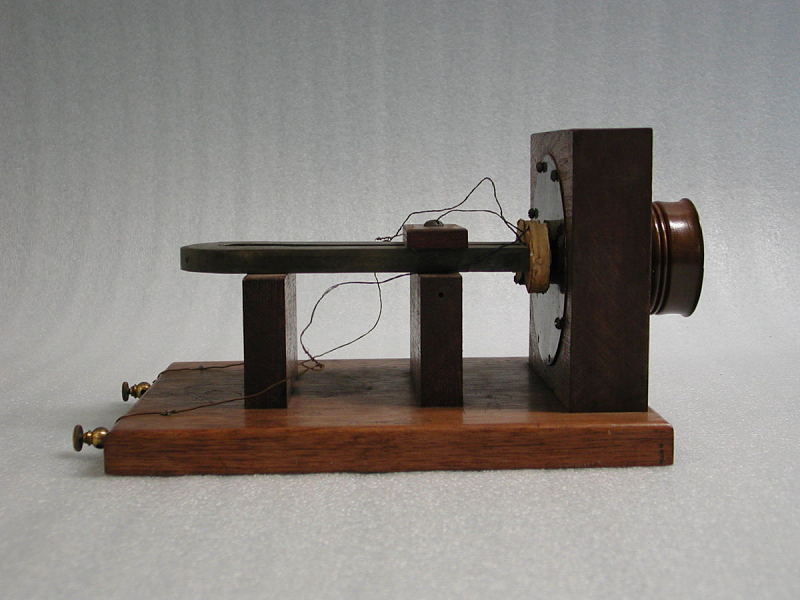
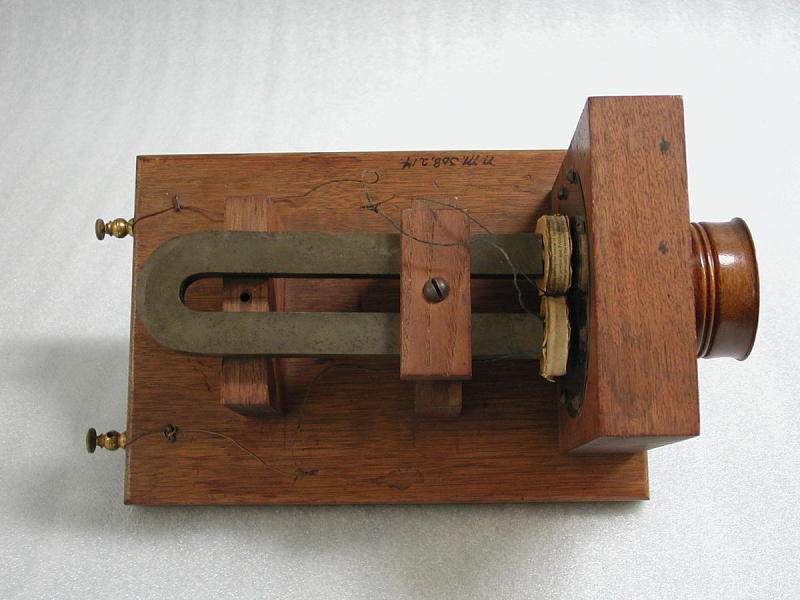
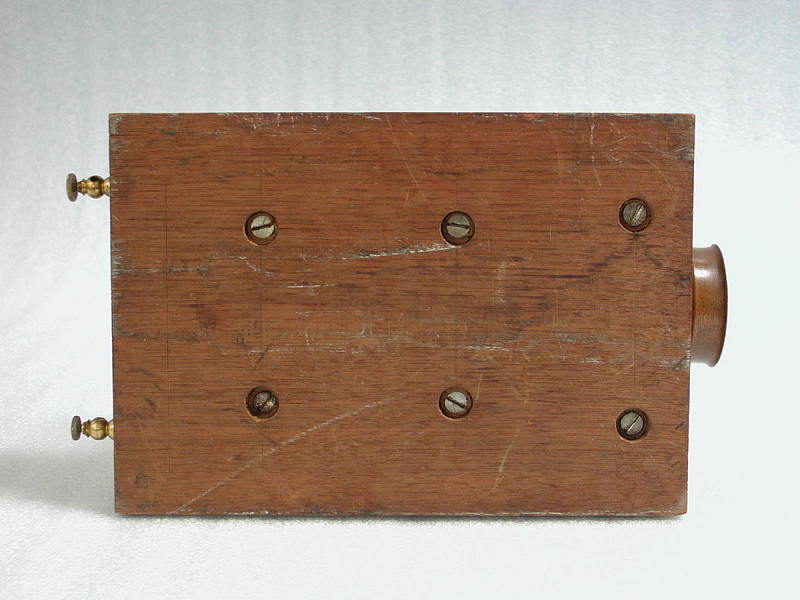
One of two telephones used by Alexander Graham Bell in a demonstration that took place between Boston and Salem, Massachusetts on November 26, 1876. Critical features are the iron diaphragm (seen as a black circular disc mounted on the vertical wooden support), two electromagnets (seen in white, facing the diaphragm) and a horseshoe permanent magnet (lying horizontal, pressed against the electromagnets).
When used as a transmitter, sound waves at the mouthpiece cause the diaphragm to move, inducing a fluctuating current in the electromagnets. This current is conducted over wires to a similar instrument, acting as a receiver. There, the fluctuating current in the electromagnets causes the diaphragm to move, producing air vibrations that can be heard by the ear. This was a marginal arrangement, but it worked well enough to be employed in the first commercial services in 1877. The magneto receiver continued to be used, but the transmitters were soon replaced by a carbon variable-resistance device designed by Francis Blake and based on a principle patented by Thomas Edison.
From : https://www.si.edu/object/alexander-graham-bells-large-box-telephone:nmah_704159
GUID (Link to Original Record) : http://n2t.net/ark:/65665/ng49ca746ab-f6ef-704b-e053-15f76fa0b4fa

